
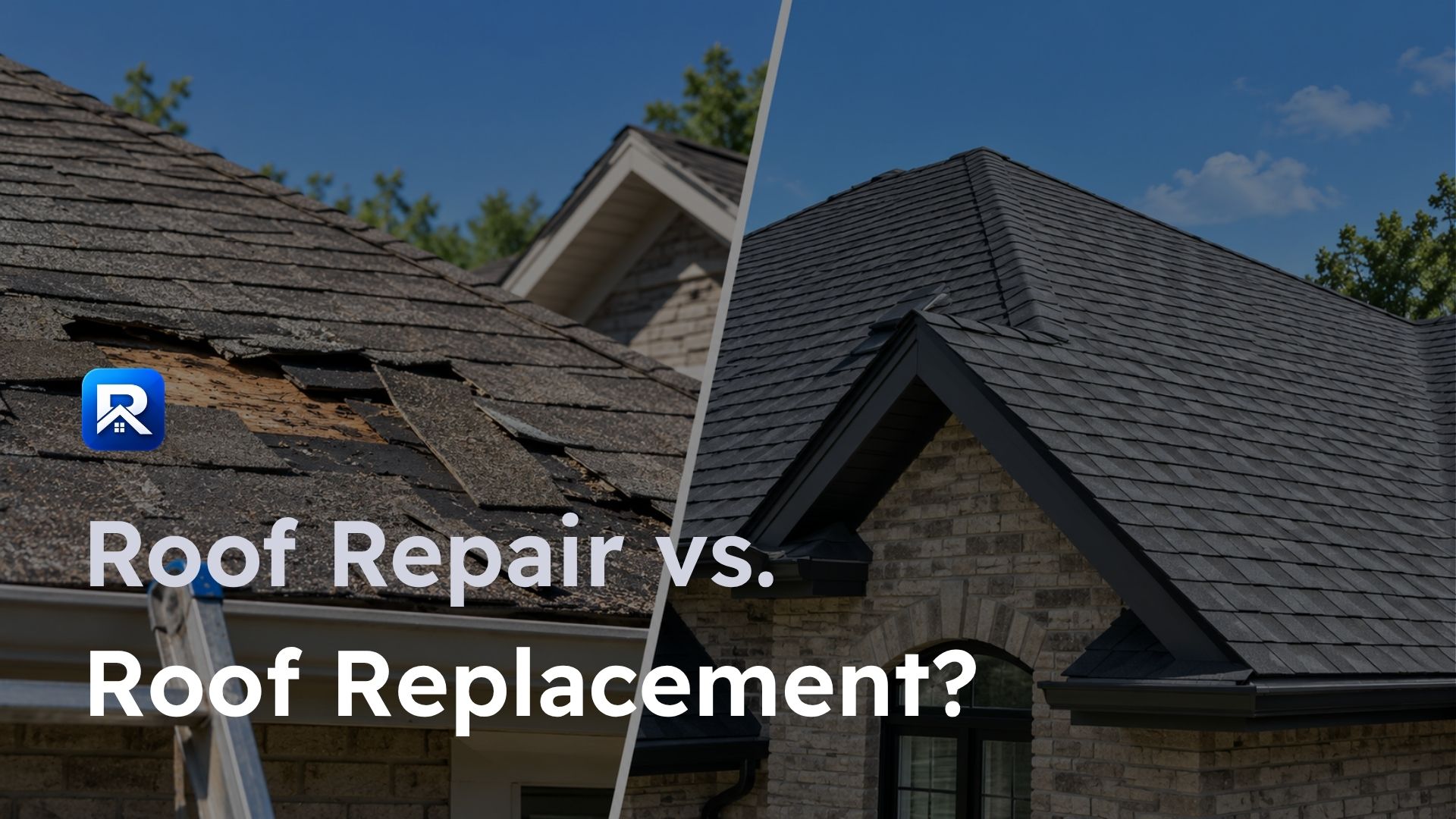

If your roof is leaking, missing shingles, or showing signs of damage, you may be wondering whether you need a roof repair or a complete roof replacement.
In general, roof repair makes sense when the damage is limited to a small area and the rest of the roof is still in good condition. Roof replacement is usually the better option when the roof is older, damage is widespread, or you’re repeatedly paying to fix new problems.
The right choice comes down to the age of your roof, the extent of the damage, and its overall condition.
What’s the Difference Between Roof Repair and Roof Replacement?
A roof repair addresses a specific problem without replacing the entire roofing system.
For example, a repair might involve replacing missing or damaged shingles, fixing flashing around a chimney, repairing a small leak, or addressing damage around a roof penetration.
A roof replacement is much more extensive. The existing roofing materials are removed so the roof deck can be inspected before a new roofing system is installed.
When Does Roof Repair Make Sense?
You don’t need to replace an entire roof every time something goes wrong.
If the problem is isolated and the rest of the roof is performing well, repairing the affected area can be the most practical and affordable solution.
A Few Missing or Damaged Shingles
Strong winds and storms can loosen or remove individual shingles even when the rest of the roof is in good condition.
If the damage is limited to a small area, the affected shingles can often be replaced without replacing the entire roof.
A Small Roof Leak
Not every roof leak means you need a new roof.
A leak caused by damaged flashing, a missing shingle, or another isolated problem may be repairable. The important part is finding the actual source of the leak rather than simply addressing the water stain inside the home.
Damaged Flashing
Flashing helps prevent water from entering vulnerable areas around chimneys, walls, skylights, vents, and other roof penetrations.
If the surrounding roofing materials are still in good condition, damaged or deteriorated flashing can often be repaired or replaced separately.
Your Roof Is Still Relatively New
If your roof still has plenty of expected service life remaining, repairing an isolated problem will usually make more sense than replacing the entire roof.
The exception is when there are significant installation problems or widespread damage.
When Should You Consider Roof Replacement?
Repairs become less practical when problems aren’t limited to one specific section of the roof.
If shingles throughout the roof are deteriorating or you’re constantly dealing with new problems, continuing to pay for repairs may only delay the inevitable.
Your Roof Is Getting Old
Roofing materials don’t last forever.
As asphalt shingles age, they can become brittle, lose granules, crack, curl, or become more vulnerable to wind and water damage.
Age alone doesn’t determine whether a roof needs replacement, but an older roof showing widespread deterioration is a strong indication that replacement should be considered.
Shingle Damage Is Widespread
Replacing a handful of damaged shingles is very different from repairing damage across several sections of a roof.
Widespread curling, cracking, missing shingles, or significant granule loss may indicate that the roofing material itself is deteriorating.
At that point, repairing individual areas may not provide much long-term value.
Your Roof Keeps Leaking
One isolated leak may have a straightforward solution.
Multiple leaks appearing in different areas can indicate a larger problem with the roofing system. If you’re repeatedly paying for repairs only for another leak to appear, it may be time to consider replacement.
The Roof Deck Is Damaged
The roof deck is the structural surface underneath your roofing materials.
If water has been entering the roofing system for an extended period, sections of the decking may become damaged or deteriorated. A roof replacement allows the existing materials to be removed so the deck can be properly inspected and damaged sections replaced.
You’re Constantly Paying for Repairs
Occasional roof maintenance is normal.
Repeated repairs are different.
If you’re regularly spending money fixing different sections of an aging roof, those costs can start adding up. In some situations, putting that money toward a complete replacement provides better long-term value.
Roof Repair vs. Roof Replacement: Quick Comparison
| Roof Repair | Roof Replacement | |
|---|---|---|
| Best for | Isolated damage | Widespread deterioration |
| Roof age | Generally newer | Generally older |
| Leaks | One identifiable problem | Recurring or multiple leaks |
| Shingle damage | Small affected area | Damage across the roof |
| Initial cost | Lower | Higher |
| Scope | Specific damaged areas | Entire roofing system |
| Long-term solution | Depends on roof condition | New roofing system |
Can You Repair an Old Roof Instead of Replacing It?
Sometimes, but whether you should is a different question.
A small repair can still be worthwhile on an older roof if the rest of the roofing system is in reasonable condition. However, repairing one section doesn’t reset the age of the surrounding shingles.
If a roof is already experiencing widespread age-related deterioration, fixing one problem may simply be followed by another.
That’s why the entire roof should be evaluated rather than making the decision based only on the most obvious damaged area.
Is It Cheaper to Repair or Replace a Roof?
A roof repair will generally cost less upfront because you’re only addressing a specific section of the roof.
However, the cheapest immediate option isn’t always the least expensive long-term option.
If the roof is otherwise healthy, repair can save you from replacing a roofing system that still has years of useful life remaining.
If the roof is already deteriorating throughout, repeatedly paying for repairs can become expensive without solving the underlying problem. In that situation, replacement may provide better value over the long term.
How Do I Know Which One I Need?
Start by looking at the entire roof rather than focusing only on the visible problem.
Consider:
- How old is the roof?
- Is the damage limited to one area?
- Are shingles curling, cracking, or missing throughout the roof?
- Have you experienced multiple leaks?
- Have you already paid for several repairs?
- Is there damage underneath the shingles?
- Is the rest of the roof still in good condition?
A professional roof inspection can help answer these questions and determine whether the problem can reasonably be repaired.
The Bottom Line
Repair your roof when the damage is isolated and the rest of the roofing system is still in good condition. Consider replacing your roof when deterioration is widespread, the roof is nearing the end of its service life, or repairs are becoming frequent.
Don’t assume a leak automatically means you need a new roof. At the same time, repeatedly repairing an aging and deteriorating roof can become more expensive than addressing the larger problem.
The goal should be to choose the option that makes the most sense for the condition of your roof, not simply the option with the lowest upfront cost.
