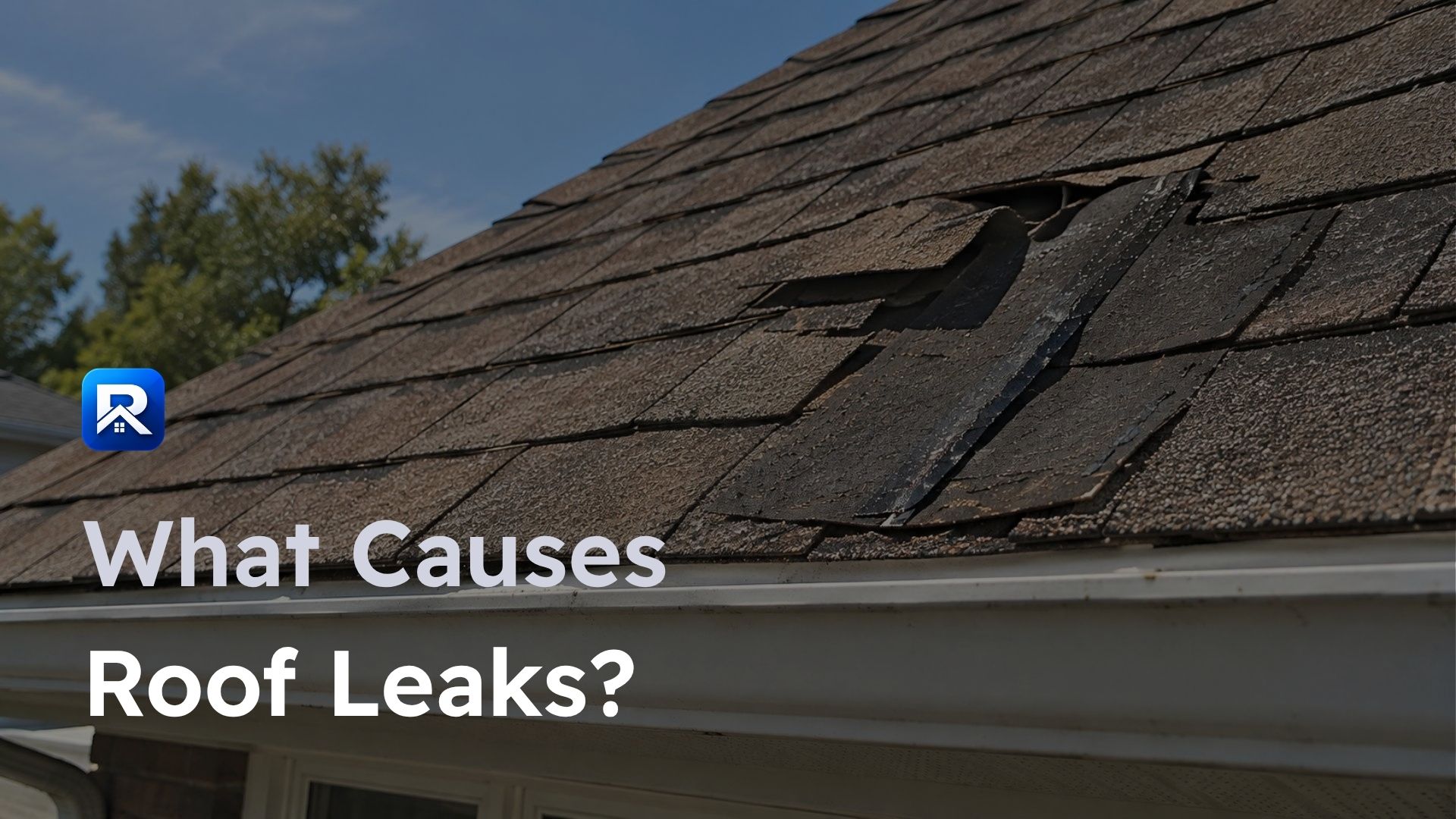

Roof leaks are usually caused by damaged shingles, failed flashing, aging roofing materials, problems around roof penetrations, clogged gutters, chimneys or skylights, and ice dams. Sometimes the source is obvious, such as shingles missing after a windstorm. Other times, water enters through a small opening and travels along the roof deck or framing before showing up somewhere else inside the home.
That means the location of a water stain on your ceiling isn’t always directly below the source of the leak. Finding the actual entry point is an important part of properly repairing a leaking roof.
7 Common Causes of a Leaky Roof
1. Damaged or Missing Shingles
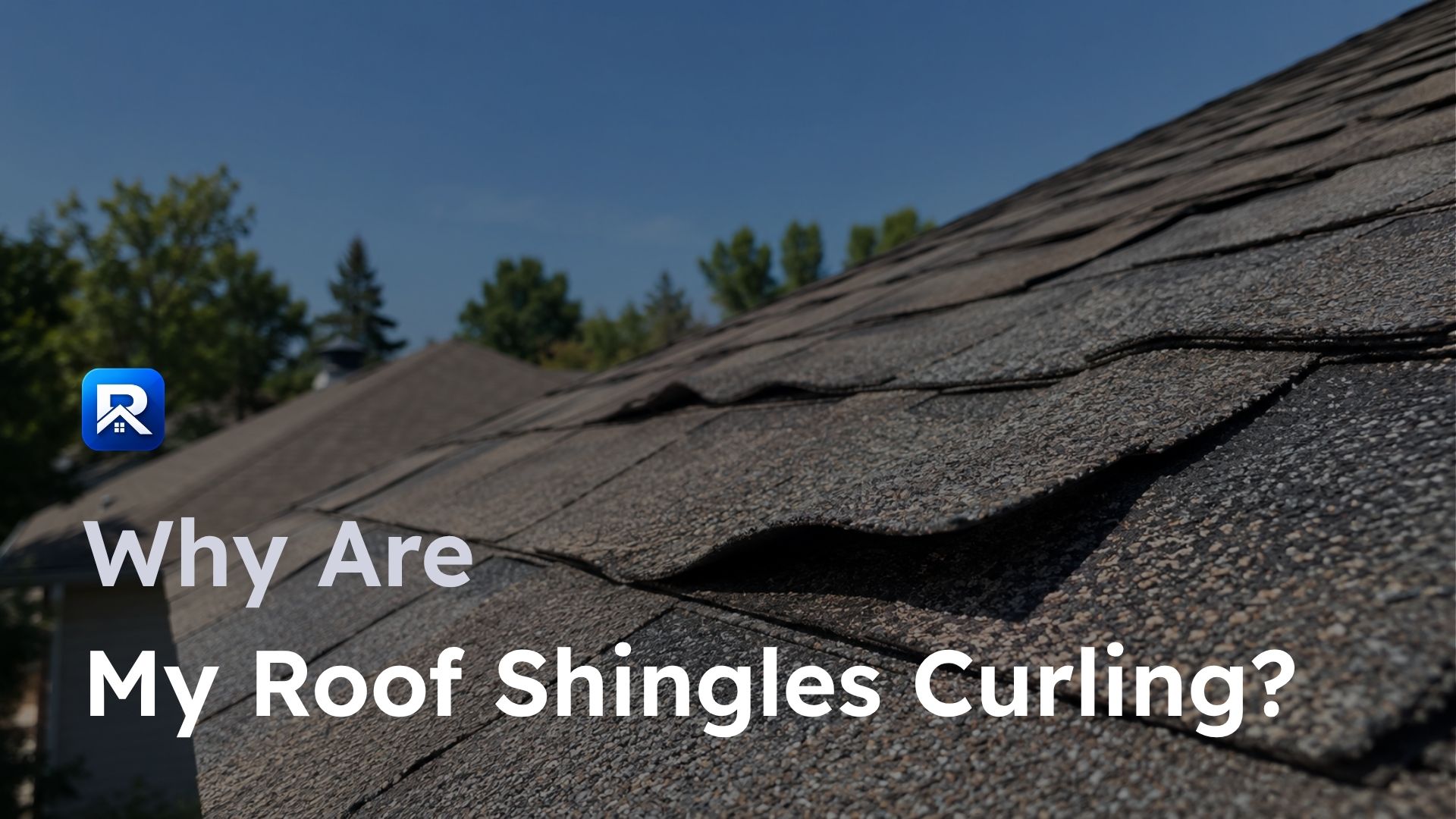
Shingles form the main water-shedding surface of most residential roofs. When shingles are missing, cracked, curled, lifted, or badly worn, the layers underneath have less protection from rain and melting snow.
Wind is a common cause of shingle damage, particularly when shingles are already older or have started to loosen. Hail, falling branches, foot traffic, poor installation, and years of exposure to the weather can also cause damage.
A few damaged shingles don’t necessarily mean the entire roof needs to be replaced. If the surrounding roof is still in good condition, individual shingles or a small affected section can often be repaired. However, widespread cracking, curling, granule loss, or missing shingles may point to a larger problem with the roof.
2. Damaged or Improperly Installed Flashing
Some parts of a roof are more vulnerable to water than others. Flashing is used in these areas to direct water away from joints, openings, and transitions where roofing materials meet.
You’ll commonly find flashing around:
- Chimneys
- Skylights
- Roof valleys
- Plumbing and exhaust vents
- Dormers
- Roof-to-wall connections
Flashing can leak if it becomes loose, bent, corroded, poorly sealed, or was installed incorrectly in the first place. Once water gets behind the flashing, it can move underneath the shingles and into the roof deck.
Flashing problems can be particularly difficult to identify from inside the home because water may travel some distance before it becomes visible.
3. An Aging Roof
Roofs don’t usually fail all at once. Roofing materials gradually deteriorate after years of exposure to sunlight, rain, snow, ice, wind, and repeated freeze-thaw cycles.
As asphalt shingles age, they can lose their protective granules, become brittle, curl at the edges, crack, or lose their ability to remain properly sealed. Flashing, sealants, vent boots, and other roof components can deteriorate at the same time.
An isolated leak on an otherwise healthy roof may only require a repair. An older roof that is developing leaks in several locations, however, may have widespread deterioration that makes repeated repairs less practical.
4. Roof Vents and Other Penetrations
Every opening through the roof creates another area that needs to remain watertight.
Plumbing vents, bathroom exhaust vents, attic vents, fasteners, and other roof penetrations are normally protected by flashing, boots, gaskets, or sealants. Over time, these materials can crack, loosen, deteriorate, or separate from the surrounding roof.
For example, the rubber boot surrounding a plumbing vent can eventually become brittle and crack. The opening may be relatively small, but it can still allow rain or melting snow to reach the roof deck.
When inspecting a roof leak, these penetrations are often some of the first areas worth checking.
5. Damaged Chimney and/or Skylights
Chimneys and skylights interrupt the normal surface of the roof, which makes proper flashing and installation especially important.
Around a chimney, water may enter through failed flashing or deteriorated sealant. Cracked masonry, damaged mortar joints, or problems with the chimney cap can also allow moisture into the structure.
Skylight leaks can have several possible causes as well. The flashing around the skylight may be damaged, seals can deteriorate, or the skylight itself may have a problem. In some situations, condensation around the skylight can also be mistaken for a roof leak.
Because of this, seeing water beside a chimney or skylight doesn’t automatically tell you exactly where the failure occurred. The feature and the surrounding roofing materials should both be inspected.
6. Clogged or Damaged Gutters
Your gutters aren’t technically part of the roof covering, but they play an important role in moving water away from the roof and home.
Leaves, branches, roofing granules, ice, and other debris can restrict drainage. Gutters can also sag, pull away from the fascia, develop leaks at joints, or become improperly sloped.
When water can’t drain properly, it may overflow or collect near the roof edge. This can keep parts of the fascia and roof edge wet and may contribute to water getting into vulnerable areas.
Gutter problems become particularly important during the fall and winter in Ontario, when leaves can block drainage before snow and freezing temperatures arrive.
7. Ice Dams
Ice dams are a winter roofing problem that can lead to leaks even when there isn’t an obvious hole in the roof.
They typically develop when heat escaping into the attic warms part of the roof and melts the snow above it. The meltwater runs toward the colder eaves, where it can freeze again. Over time, this creates a ridge of ice along the roof edge.
Additional meltwater can then collect behind the ice dam. Instead of draining normally, that water may work its way underneath shingles and reach the roof deck.
Removing the ice addresses the immediate problem, but recurring ice dams can indicate issues with heat loss from the home. Improving attic insulation and air sealing, along with maintaining appropriate roof and attic ventilation, can help reduce the conditions that cause them.
How Do You Find the Source of a Roof Leak?
Start by looking at where the leak appears inside the home, but don’t assume the roof damage is directly above it. Water can run along roof decking, rafters, pipes, and other surfaces before dripping onto the ceiling.
From the exterior, common areas to inspect include missing or damaged shingles, flashing, roof vents, valleys, chimneys, skylights, and other penetrations. Inside the attic, wet roof decking, water stains, damp insulation, or signs of mould may help narrow down where water is entering.
Roof inspections should be done safely. A wet, icy, snow-covered, or steep roof can be dangerous to access, and in many cases the source of a leak can be investigated without a homeowner climbing onto the roof.
Have a Roof Leak?
A roof leak can quickly lead to damaged decking, insulation, ceilings, and other parts of your home. If you’ve noticed water stains, missing shingles, or signs of moisture, it’s best to have the cause inspected before the damage gets worse.
For isolated leaks or damaged roofing, learn more about our Roof Repair services. If your roof is older or has widespread damage, explore our Roof Replacement services.