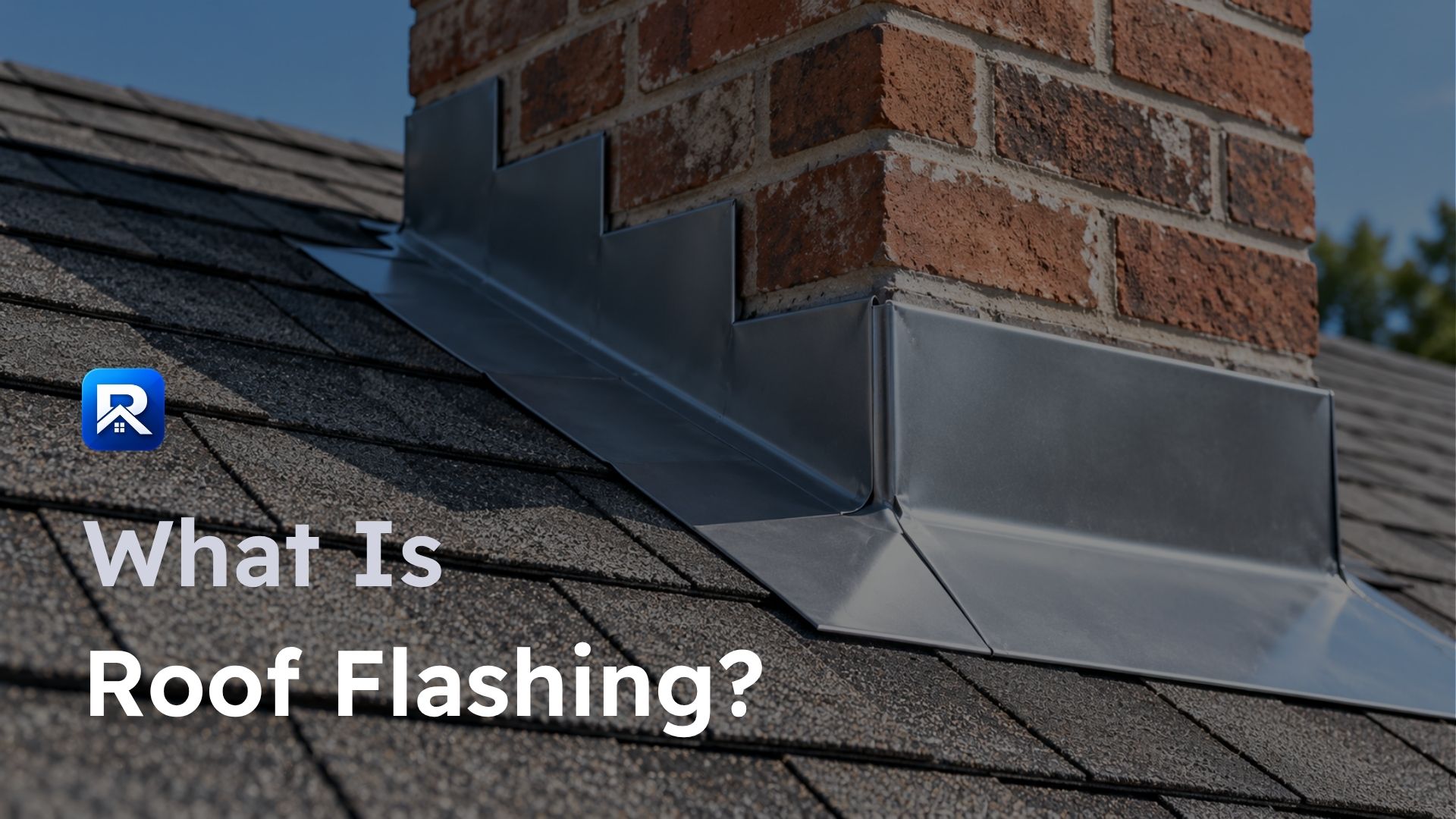

Roof flashing is a thin, water-resistant material installed around vulnerable areas of a roof to direct water away from openings, joints, and transitions. You’ll commonly find flashing around chimneys, skylights, vents, valleys, walls, and other areas where water could otherwise get underneath the roofing material.
Although flashing makes up a relatively small part of your roof, it plays an important role in preventing leaks. Damaged, missing, or improperly installed flashing is a common place for water intrusion to develop.
Where Is Roof Flashing Used?
There isn’t just one piece of flashing on a typical roof. Different areas require different types and installation methods.
Chimneys
Chimneys create a large penetration through the roofing system and require flashing where the chimney meets the roof.
A combination of flashing components is generally used to direct water around the chimney and prevent it from entering the joint between the masonry and roofing materials.
Skylights
Skylights also create an opening in the roof and need flashing around their perimeter.
Properly installed skylight flashing helps direct water around the unit and back onto the roofing surface. Problems with flashing are one possible reason homeowners may notice water around a skylight.
Roof Vents
Plumbing vents and other roof penetrations require flashing where they pass through the roofing material.
These components typically use a flashing system designed to create a watertight transition between the penetration and surrounding shingles.
Roof Valleys
A roof valley is where two sloped sections of a roof meet.
Because water from both roof slopes is directed toward the valley, it can carry a significant amount of rain or melting snow. Proper installation in these areas is particularly important for moving water safely toward the gutters.
Walls and Roof Transitions
Flashing is also used where a roof meets a vertical wall, dormer, or another part of the home.
These transitions create natural areas where water could otherwise collect or work its way underneath the roofing material.
What Is Roof Flashing Made Of?
Roof flashing is commonly made from metals such as galvanized steel or aluminum. Copper may also be used on certain roofing systems.
The appropriate material depends on the roof, application, surrounding materials, and installation requirements.
Regardless of the material, the purpose is essentially the same: create a durable barrier that directs water away from vulnerable parts of the roof.
Different Types of Roof Flashing
The term “roof flashing” actually describes several different components.
Step Flashing
Step flashing consists of individual pieces installed where a sloped roof meets a vertical wall.
The pieces overlap one another and work together with the shingles to direct water down the roof instead of allowing it to enter the joint between the roof and wall.
Counter Flashing
Counter flashing is commonly used with masonry, particularly around chimneys.
It works together with other flashing to prevent water from getting behind the flashing system.
Apron Flashing
Apron flashing is a larger continuous piece commonly installed along the lower side of a roof penetration such as a chimney.
It directs water away from the front of the penetration and back onto the roofing surface.
Valley Flashing
Valley flashing helps manage water where two roof slopes meet.
Because valleys handle concentrated water runoff, proper installation is especially important.
Drip Edge
Drip edge is metal flashing installed along the edges of a roof. It helps direct water away from the roof deck and into the gutter or away from the fascia.
What Happens When Roof Flashing Is Damaged?
Damaged flashing can create an opening for water to enter the roofing system.
Over time, flashing can loosen, corrode, separate, bend, or become damaged. Sealants around certain flashing components can also deteriorate.
Potential signs of a flashing problem include:
- Water stains on ceilings or walls
- Leaks around a chimney
- Water appearing around a skylight
- Visible gaps around flashing
- Loose or bent metal
- Corrosion or deterioration
- Missing flashing
- Signs of moisture around roof penetrations
Water can travel after entering a roofing system, so the location of an interior stain doesn’t always identify exactly where the roof is leaking.
Can Roof Flashing Be Repaired?
Yes. In many situations, damaged roof flashing can be repaired or replaced without replacing the entire roof.
If the problem is isolated and the surrounding shingles and roof deck remain in good condition, a roof repair may be enough to correct the issue.
However, the surrounding roofing materials should also be inspected. A flashing problem that has allowed water into the roof for an extended period may have caused additional damage underneath the shingles.
Does Roof Flashing Need to Be Replaced With a New Roof?
Flashing should be carefully inspected whenever a roof is replaced.
Whether existing flashing can remain depends on its condition, the roofing system, manufacturer requirements, and how the new roof is being installed.
Damaged, deteriorated, or improperly installed flashing should not simply be covered by new roofing materials. A roof replacement is an opportunity to inspect these vulnerable areas and ensure they’re properly protected.
How Long Does Roof Flashing Last?
There isn’t one lifespan that applies to every piece of roof flashing.
Its service life depends on the material, installation quality, location, weather exposure, surrounding roofing materials, and maintenance.
Good-quality metal flashing can last for many years, but the surrounding roof and connections can still deteriorate or become damaged.
That’s why flashing should be inspected as part of the overall roofing system rather than assuming it’s in good condition based solely on its age.
Is Roof Flashing Important?
Yes. Flashing is one of the components that helps your roof manage water.
Shingles protect the large surface areas of a roof, while flashing helps protect many of the complicated areas where shingles alone aren’t enough.
A roof can have perfectly good shingles and still develop a leak if the flashing around a chimney, skylight, vent, wall, or other penetration fails.
The Bottom Line
Roof flashing is a protective material used to direct water away from vulnerable areas of your roofing system.
You’ll find it around chimneys, skylights, vents, valleys, walls, roof edges, and other areas where water could potentially enter.
If flashing becomes loose, damaged, deteriorated, or improperly installed, it can lead to roof leaks even when the surrounding shingles appear to be in good condition.
If you’re noticing water around a chimney, skylight, vent, or another roof penetration, the flashing should be one of the areas inspected.