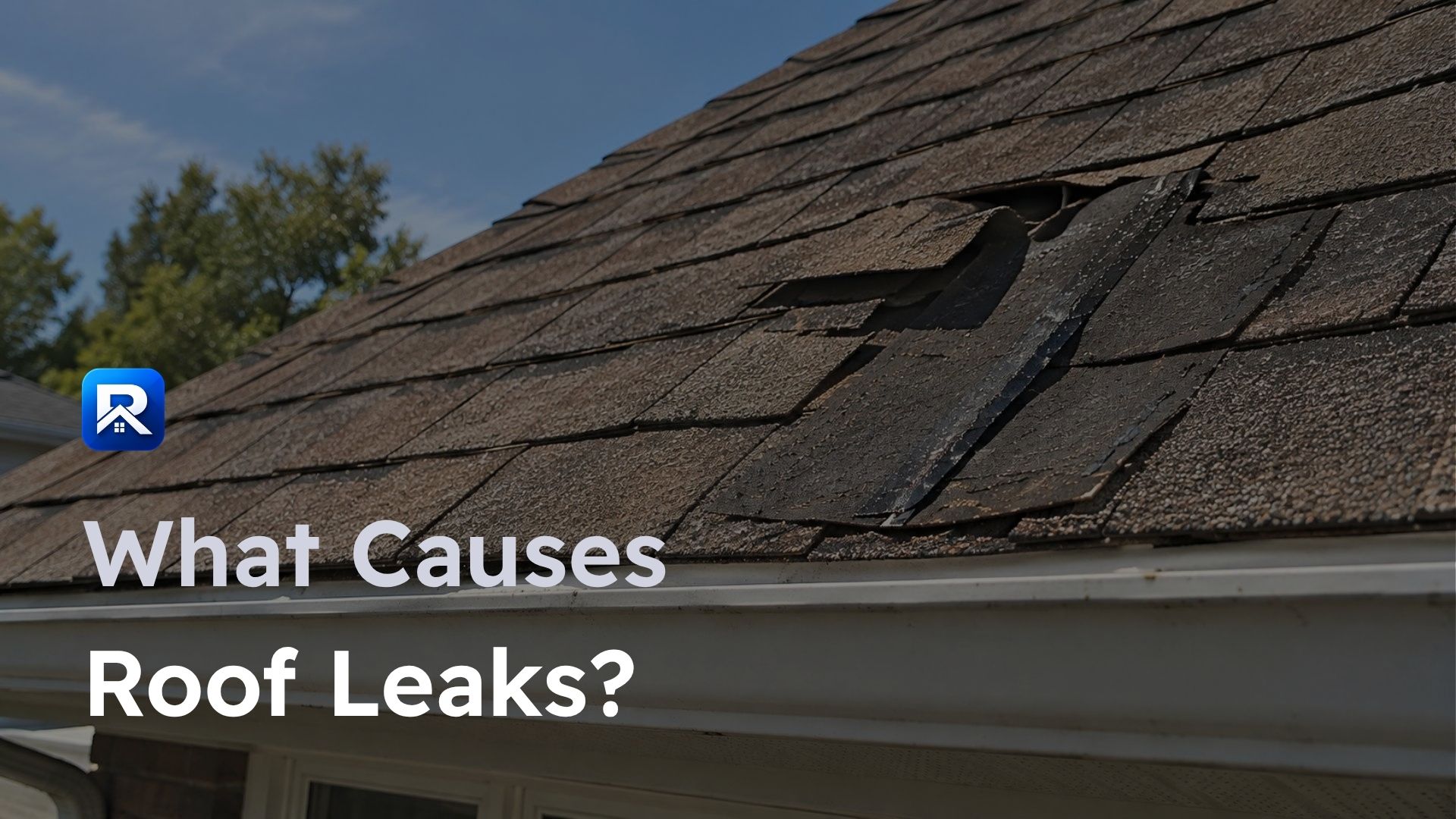

Roof shingles typically start curling because of age, heat, poor attic ventilation, moisture, improper installation, or years of exposure to the weather. A few curling shingles may be repairable, but widespread curling can be a sign that your shingles are deteriorating and the roof is approaching the point where replacement should be considered.
Curling shouldn’t be ignored. When the edges or corners of asphalt shingles lift away from the roof, they become more vulnerable to wind and can make it easier for water to get underneath the roofing material.
What Do Curling Shingles Look Like?
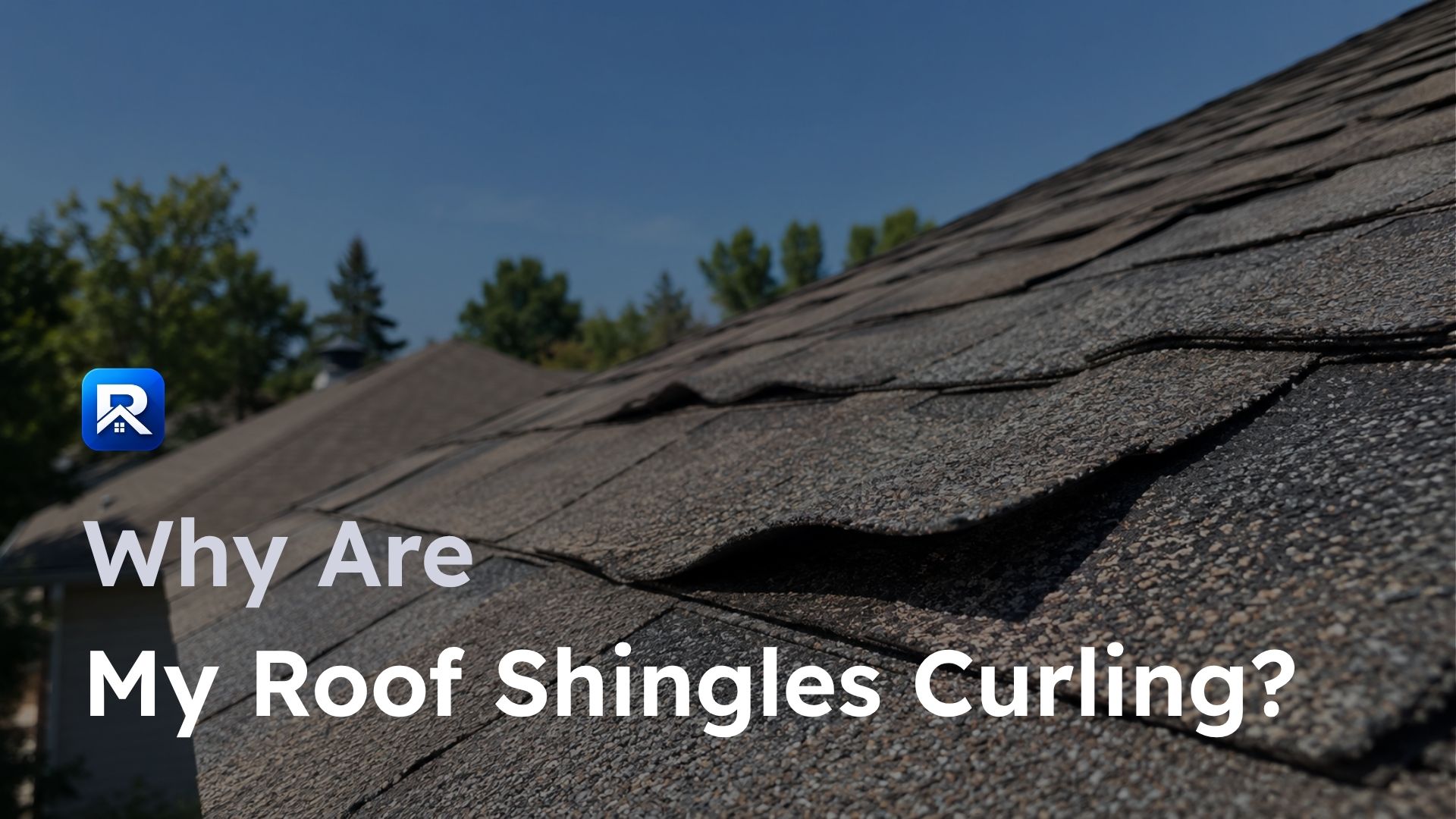
Curling usually appears along the edges or corners of asphalt shingles. Instead of lying flat against the roof, parts of the shingle begin to curve or lift upward.
You may notice curled corners, raised edges, warped shingles, cracking, or several shingles lifting across the same section of your roof.
Why Are My Roof Shingles Curling?
There isn’t always one specific cause. The age of your roof, attic conditions, installation quality, and exposure to Ontario’s weather can all contribute to curling shingles.
1. Your Shingles Are Getting Old
Age is one of the most common causes of curling shingles.
As asphalt shingles spend years exposed to sunlight, heat, rain, snow, ice, and changing temperatures, they gradually lose their flexibility. Older shingles can become dry and brittle, causing their edges and corners to curl upward.
If curling is appearing across large sections of an older roof, the shingles may simply be reaching the end of their useful life.
2. Your Attic Isn’t Properly Ventilated
Your attic needs ventilation to allow excess heat and moisture to escape.
Without adequate ventilation, excessive heat can build up underneath the roof deck. Over time, these conditions can contribute to premature deterioration of the shingles above.
If relatively new shingles are beginning to curl, checking the attic ventilation may help identify an underlying problem.
3. The Shingles Were Improperly Installed
Installation problems can cause shingles to lift, curl, or deteriorate earlier than expected.
Incorrect nail placement, insufficient fastening, poor alignment, or installation that doesn’t follow the shingle manufacturer’s requirements can all affect how well the shingles perform.
Significant curling on a relatively new roof may be worth having professionally inspected.
4. Moisture Is Affecting the Roofing System
Excess moisture inside the attic or roofing system can contribute to deterioration of the roof deck and roofing materials.
This is one reason curling shingles shouldn’t be treated as purely a cosmetic problem. The visible curling may be a symptom of another issue that needs to be addressed.
5. Years of Weather Exposure
Ontario roofs experience a wide range of conditions throughout the year, including summer heat, freezing temperatures, snow, ice, strong winds, and repeated freeze-thaw cycles.
Years of exposure eventually take a toll on asphalt shingles, particularly when the roof is already getting older.
Are Curling Shingles Bad?
Curling shingles are a sign that something isn’t working as intended.
As a shingle lifts away from the roof, it becomes more vulnerable to wind and physical damage. Raised edges may also make it easier for wind-driven rain or melting snow to get underneath the roofing material.
That doesn’t necessarily mean your entire roof needs to be replaced. The severity and extent of the curling matter.
Can Curling Shingles Be Repaired?
Sometimes.
If only a few shingles are curling and the surrounding roof is still in good condition, the damaged shingles may be individually replaced.
However, repairing individual shingles becomes less practical when curling is widespread. If shingles throughout the roof are curling because they’re deteriorating with age, replacing a handful of them won’t solve the larger problem.
Do Curling Shingles Mean I Need a New Roof?
Not necessarily.
A few isolated curling shingles on an otherwise healthy roof may only require a roof repair.
A roof replacement becomes more likely when curling is widespread or appears alongside other signs of deterioration, including cracked or missing shingles, significant granule loss, recurring leaks, or extensive shingle damage.
The roof’s age and overall condition should ultimately determine whether repairing or replacing it makes more sense.
What Should I Do About Curling Shingles?
If you’ve noticed curling shingles, have the roof inspected before the problem becomes more extensive.
A roofer can determine whether you’re dealing with a handful of damaged shingles or a larger issue involving the roof’s age, ventilation, moisture, or installation.
Finding the cause early may allow the affected area to be repaired before it contributes to leaks or additional damage.